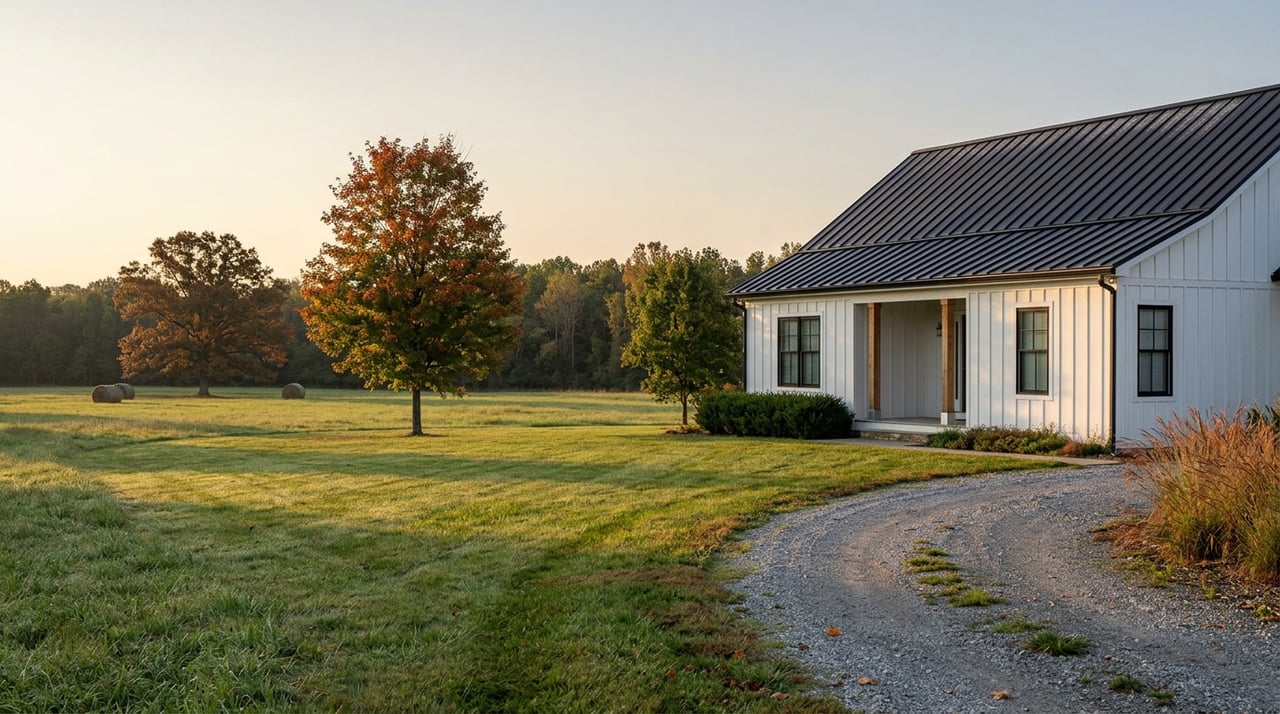
Why the Nursery Capital of the World Only Opens Up in the Fall
September 3, 2026
September 3, 2026
Drive Old Nashville Highway most weeks of the year and you'll see the real economy of Warren County rolling past in the other direction: flatbed trucks stacked with balled-and-burlapped trees, headed for interstate on-ramps and points beyond. What you won't see, most weeks, is anywhere to pull over. The nurseries that made this county famous mostly don't want your car in their lot. They want your order on a wholesale invoice.
Then Labor Day passes, the fair packs up its rides, and for about six weeks the whole arrangement flips. Hand-painted signs go up. Gates that stay chained the other ten months swing open. If you've lived here a while, you already know the season by feel. What's worth knowing is why it works this way, and which few weeks actually matter if you want to see the thing McMinnville is famous for up close instead of just driving past it on a truck bed.
McMinnville and Warren County are home to more than 400 nurseries, a density that earned the area its "Nursery Capital of the World" title and keeps it there. The soil is the reason: this stretch of the Highland Rim sits on what growers still call the Barrens, ground with a mineral profile that happens to be close to perfect for raising nursery stock at scale. Add a mild climate and you get a place that can grow trees faster and more reliably than most of the country around it.
Here's the part that surprises people who assume "nursery capital" means you can wander into any greenhouse on a Saturday: most of these operations are strictly wholesale. They exist to fill semi-trucks, not foot traffic. A handful of retail-facing spots serve local homeowners and visitors directly, but they're the exception in a county built to ship, not to sell over the counter.
That's the mechanism worth understanding. The nursery trade isn't hiding from the public. It's just built for a different customer, one in Ohio or Georgia placing a bulk order, not someone stopping in for a single dogwood on their lunch break.
Cumberland Valley Nursery is the clearest example of how deep that wholesale identity runs. The operation dates back to 1902, and Phillip Pelham has run it since 1992, after starting as a partner in 1988. His son Nick now works alongside him as vice president. Together they grow roughly 1.5 million fruit trees a year, across more than 150 varieties of peaches, plums, nectarines, apples, pears, cherries, apricots and almonds, almost all of it sold wholesale to commercial orchards.
What makes that number land is the scarcity around it. Of the 400-plus nurseries in this county, only two specialize in fruit trees for commercial growers. Cumberland Valley is one of them. A business that size, doing that specific a job, has been quietly shipping fruit trees out of Warren County since before McMinnville had paved roads to most of its farms. Nick has said farming and working outside is all he's ever done, which tracks: this is a trade passed down inside a handful of families, not a startup sector chasing a trend.
Homeowner demand for a backyard fruit tree or two exists, and Cumberland Valley will sell to individuals who ask. But that's a side door on a business built for pallets, not a retail counter with regular hours.
Fall is different. It's the season when the county's agricultural base turns some of its land toward the public instead of the interstate, and it happens in three specific places.
Cedarwood Farms, at 2900 Old Nashville Highway, runs its 26th annual pumpkin patch from September 20 through October 31, 2026. The hours aren't a single block of time, which trips people up if they show up expecting a normal retail schedule:
General admission runs $15 for ages three and up, and covers the corn maze, hay maze, two petting zoos, the corn crib and a new 100-foot super slide added this season. Bonfires run Friday and Saturday nights starting at 5 p.m. for an extra $6, or $21 for a package that bundles the whole visit with a pumpkin, hotdogs, marshmallows and a drink. Twenty-six years in the same spot is its own kind of data point. This isn't a pop-up operation testing the market. It's a farm that figured out decades ago how to turn a slice of its land into a public season, then kept doing it.
The Warren County Farmers' Market runs downtown and is the closer, quieter version of the same idea. Fewer amusement-park trappings, more direct access to whatever local growers actually have ready that week. It's the place to buy produce from the same soil that grows the trees you never see, without the drive out to Old Nashville Highway.
Rock Cliff Farm Market, just outside town, splits the difference: a farm-to-table stop with fresh produce, baked goods and Southern-style meals, open on a schedule closer to a regular market than a seasonal attraction.
None of these three operations are trying to compete with the wholesale nursery trade. They're the retail face of an agricultural economy that spends most of the year facing away from the public entirely.
Put the two halves of the year side by side and the pattern is plain.
| Most of the year | Fall (roughly Sept–Oct) | |
|---|---|---|
| Who the customer is | Commercial orchards, landscapers, out-of-state buyers | Local residents and families |
| How product moves | Semi-truck, wholesale invoice | Walk-up, cash or card at the gate |
| What's visible from the road | Trucks, fencing, "no public access" signs | Pumpkin patch flags, farm stand signs |
| Example business | Cumberland Valley Nursery (1.5M fruit trees/year, wholesale) | Cedarwood Farms (26th season, public admission) |
The takeaway isn't that McMinnville suddenly becomes agricultural in October. It's agricultural all year. What changes in the fall is which slice of that economy is built to let you in. The same soil that makes this the Nursery Capital of the World is growing pumpkins at Cedarwood and produce at the farmers market, it's just that for ten months a year, that soil's output is headed somewhere else.
If you've lived here for years and never set foot on a working farm despite living in the middle of one of the densest nursery regions in the country, that's not an oversight on your part. It's how the county is built. The gate is only open a few weeks. This is one of them.
At The Wingate Group LLC, we spend as much time thinking about how land gets used, whether that's a working nursery, a rural parcel, or a home on the edge of one of these farm operations, as we do about closing paperwork. If you're curious what a piece of Warren County ground is actually built for, or what it would take to put your own few acres to work, we're glad to talk it through. Schedule a Consultation whenever you're ready.
Stay up to date on the latest real estate trends.

Make BIG Money with your home!
We pride ourselves in providing personalized solutions that bring our clients closer to their dream properties and enhance their long-term wealth.
GET IN TOUCH WITH OUR TEAM TO LEARN MORE
THE WINGATE GROUP
119 W MAIN ST STE 7 MCMINNVILLE, TN 37110