Manchester Will Let You Paint a Mural Downtown. Just Not on the Front.
September 17, 2026
September 17, 2026
"It is a beautiful sign and so creative," Alderman Paul Thorton told the Manchester Historic Zoning Commission on September 3. Then he voted against it anyway.
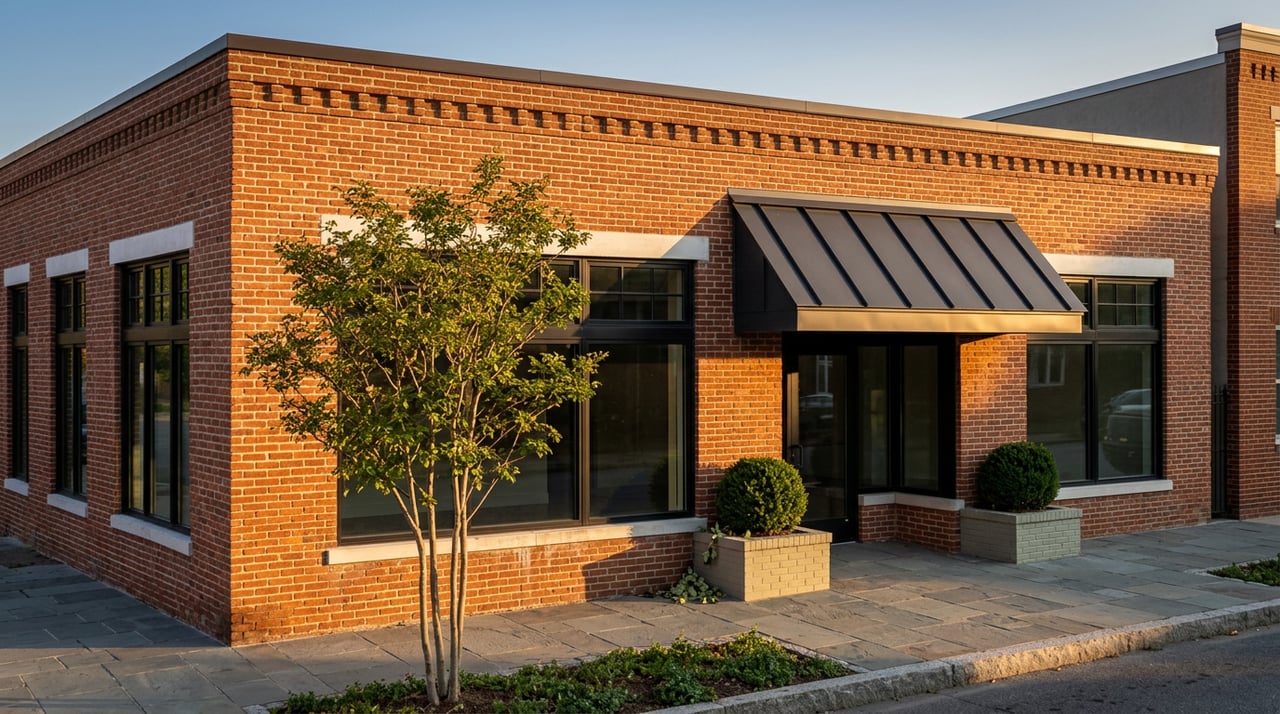
The design in question belonged to the Manchester Arts Center, which wanted to place a mural on two bricked-in windows flanking its own front doors. The Commission liked the artwork. Nobody on the board argued the colors were wrong or the concept was disrespectful. What they argued, again, was where a mural is allowed to live in a town that has spent almost a decade fighting about exactly that question and never really settling it in writing.
If you live in Manchester, you already sense the shape of this argument even if you've never sat through a zoning meeting. It shows up as a new coat of paint on a side wall downtown, or as a story your neighbor half-remembers about a flag on Spring Street that once got the police called. What most residents don't have is the through line connecting those moments. It's there, and it's simpler than the arguments make it sound: Manchester has never really said no to murals. It has just never once said yes to putting one on the front.
Molly Metts, chair of the Arts Center's board art committee, presented the mural concept for the building's entrance. The Commission's objection wasn't aesthetic. It came down to a specific reading of the city's historic district ordinance, which bars murals near a building's main entrance unless there's no other viable wall to use.
There was another wall. The Center's building already has a mural on its Woodland Street side, painted years ago as a community arts project through a partnership with the Manchester Chamber of Commerce. Because that side exists and is paintable, the ordinance treats the front as off-limits by default.
The Commission's newest member, Holly McLaren, pushed back, arguing that denying the request ran against the spirit of the rule rather than in service of it. She described what the Center actually wanted to paint: not the bold rainbow palette people might picture, but muted blues, orange, and black meant to sit quietly against the historic brick.
It didn't matter. The motion to grant the Arts Center an exception failed six to two. A second motion, allowing the Center to replace a portion of the existing Woodland Street mural instead, passed unanimously. Board members even floated pulling down the Center's current sign, donated years ago by James Harden Signs, and letting the new mural double as the building's signage instead.
Metts said afterward that the organization is hesitant to touch the community mural already there. So for now, the front of the Manchester Arts Center stays bare brick, and the debate stays exactly where it's been for years: not about whether art belongs downtown, but about which wall gets to hold it.
Go back several years, well before Holly McLaren ever joined the board, and Manchester had a louder version of the same fight. Artist Tara Aversa was hired to paint the side of the building on Spring Street, home to Wheeler's Construction and Restoration, near the entrance to historic downtown. The design was an American flag shaped like a magnolia, with the word "Manchester" worked into it.
The Historic Commission at the time found it disrespectful and wanted it covered. Commission member Pat Berges put her objection plainly: "It has nothing to do with Manchester history." Local businessman Scott Van Velsor, working with the building's owner, believed the project had already cleared the approvals it needed. When Aversa kept painting through the disagreement, someone on the Commission called the police. Officers came, looked at the wall, and left. Painting isn't a crime.
Aversa finished the mural on Mother's Day weekend. Once it was up, the reaction flipped. Residents who stopped to photograph it on the Fourth of July called it a welcome addition to downtown. One longtime resident told a local TV crew it gave downtown "a facelift." The same meeting minutes that recorded the Commission's objections also included language committing the board to "embrace the use of murals within the Historic Zone to promote tourism and economic improvement." The wall stayed. The mural stayed. It's still there today.
Put the two stories side by side and the pattern is hard to miss. Years ago, a mural on a side wall near a downtown entrance survived a fight that included a police call and a public argument about respect and history. This September, a mural proposed for a front wall near an entrance never got that far. It was redirected to a side wall before it was ever painted.
Manchester's historic ordinance is written around the idea of alternative locations, not blanket prohibition. In practice, that language has hardened into something closer to an unwritten local custom: side walls downtown are canvases. Front walls facing Main Street or a building's own entrance are not, at least not on the first ask. Nobody voted this into the code as a bright line. It has simply been true every time the question has actually come up.
What also changed between then and now is the temperature. The Aversa fight involved police, public accusations, and a businessman who ended up defending his own right to finish a job he'd already been told he could do. The Arts Center's rejection this month played out entirely through motions and a six-to-two vote, calm enough that the losing side and the winning side left the same meeting with a unanimous compromise already lined up. The line hasn't moved. The way Manchester argues about it has.
If you've walked Main Street or cut through downtown on Spring or Woodland, you've likely already seen where this unwritten rule has landed:
None of these walls were chosen at random. Every one of them is a side wall, not a front. That's not decoration. It's the town's actual policy, playing out one building at a time.
None of this makes Manchester unusual among small Tennessee towns trying to protect a historic core while still wanting some visual life on its walls. What makes it worth knowing, if you live here, is that the rule governing what you can put on your own building's front isn't sitting in a paragraph you could look up before a meeting. It's sitting in the pattern of two fights, years apart, and you'd only know that by having watched both of them unfold.
That's the kind of local knowledge that doesn't show up in a chamber brochure or a city council agenda summary. It shows up in knowing that if you own a building downtown and want to put something bold on its face, the smart move is to ask which side wall is available before you ever bring a design to the Commission. Manchester has already told you the answer. It just told you twice, years apart, without ever writing it down.
That's the kind of thing you only pick up by paying attention to a place over time, which is the same habit The Wingate Group brings to every conversation about property here, whether it's a mural on a side wall or a building those walls belong to. If you're weighing a move on a downtown property in Manchester or just want a second set of eyes informed by local experience, schedule a consultation and we'll talk through what we know.
Stay up to date on the latest real estate trends.

Make BIG Money with your home!
We pride ourselves in providing personalized solutions that bring our clients closer to their dream properties and enhance their long-term wealth.
GET IN TOUCH WITH OUR TEAM TO LEARN MORE
THE WINGATE GROUP
119 W MAIN ST STE 7 MCMINNVILLE, TN 37110